


Recruiting a Medical Device Clinical Specialist
Settle the procedure and the setting, know where clinical specialists come from, start hospital credentialing with your finalists, and interview case coverage as a scenario talked through out loud.
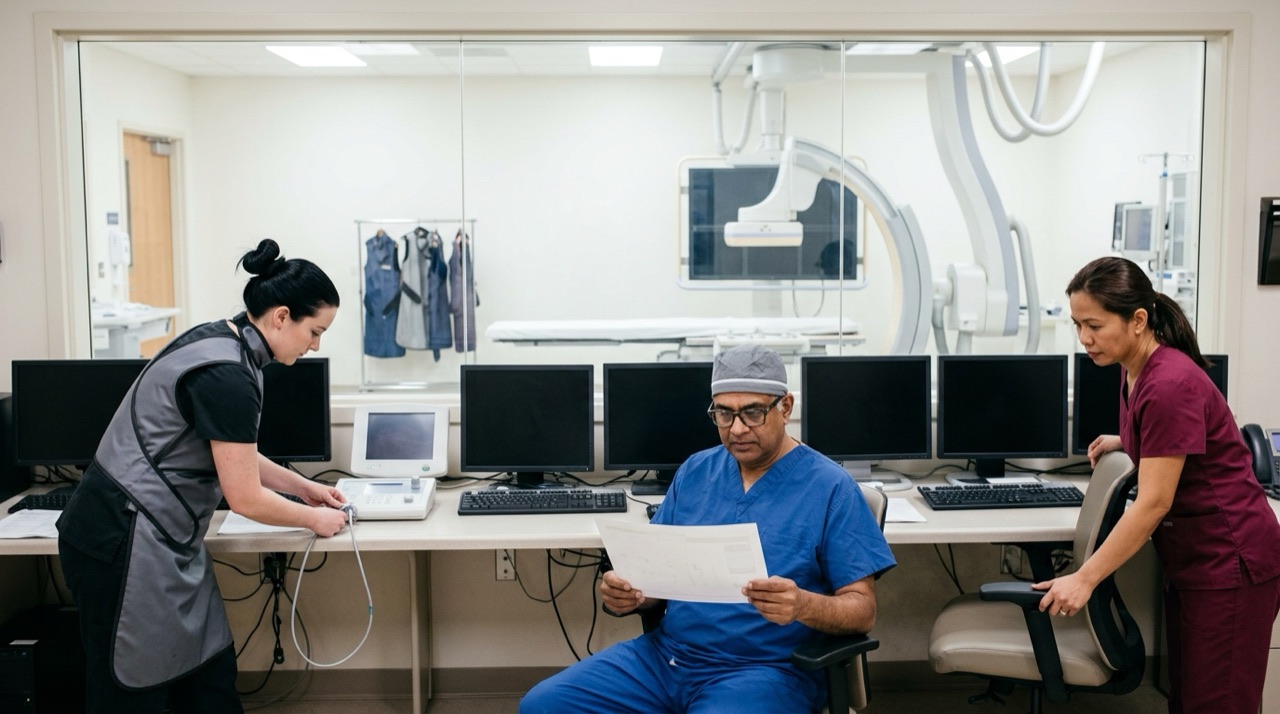
Settle which procedure and setting the clinical specialist will cover, start the hospital credentialing conversation with your finalists, and interview case coverage as a scenario talked through out loud. A clinical specialist is the person in the room supporting the physician during a procedure, training the account's staff and making sure the device performs the way it should in real use. The role has a direct effect on whether an account adopts the device.
- A medical device clinical specialist supports the physician during procedures, trains the account's staff and makes sure the device performs as it should in real use.
- Settle the procedure, the setting and whether the account needs hands-on case coverage, technical depth or both before posting a clinical specialist role.
- Hospital vendor credentialing runs facility by facility on the health system's timeline, so name its requirements to clinical specialist finalists in the first conversation.
- Interview a clinical specialist candidate with a case-day scenario talked through out loud, starting the afternoon before the first case.
- A strong answer to a case-coverage scenario covers preparation with the staff the day before, what the candidate told the physician and when, when they called for technical support, and how they logged the event.
We recruit clinical specialists by procedure and therapeutic area in medical device and diagnostics. The engineer who installs and repairs the system is covered in how to hire a field service engineer.
Settle the procedure and the setting
Each procedure calls for a different profile. An electrophysiology or structural-heart specialist supports complex cases in the lab, and an orthopedics or spine specialist supports the OR. In diagnostics the equivalent role is the field application specialist, who supports the bench with instrument installation, assay validation and troubleshooting against a turnaround-time and quality-control standard.
Then say whether the account needs hands-on case coverage, technical depth or both. In electrophysiology, structural heart, spine or surgical robotics, case coverage can mean mapping catheters, sizing implants or guiding console workflow live. On more engineered platforms the work shades into field clinical engineering, where the specialist also routes real-world performance feedback back to R&D.
At an emerging company, the clinical specialist is often the first clinical field hire and helps define how cases are covered, how accounts are trained and how proctoring and physician education come together. At a sponsor-backed device maker, the specialist is usually measured on case support and on how quickly accounts can run the procedure on their own. Pharma and biopharma rarely hire for this role directly, and for scientific engagement with clinicians see how to hire a medical science liaison.
Know where clinical specialists come from
Nurses, surgical technologists and allied health professionals from the OR or the cath and EP labs know the room and the procedure. Test their teaching and their appetite for travel, and ask how they would handle a physician who wants the case done differently.
Clinical specialists at other device companies in the same or an adjacent procedure know the role. Ask which health systems they are credentialed at today and what has lapsed.
Medical technologists and clinical laboratory scientists are the usual route into a diagnostics field application role. Ask how they would explain accuracy and throughput to a lab director.
Field clinical engineers suit the more engineered platforms. Ask how much of their week was spent in cases.
Start credentialing at the finalist stage
Most health systems run vendor access through a credentialing program, separate from your own background check, and access is granted facility by facility. Expect immunization records, usually measles, mumps and rubella titers, varicella, a tuberculosis screen and a flu shot in season, plus the program's own background check and training modules on infection control and patient privacy.
Name the credentialing programs and the immunization list in the first conversation with each finalist. Open the health records file the day the conditional offer is signed, and write two dates into the offer, a payroll start and a first-case date, as our guide to a device rep's start date describes. Submit to the accounts that carry the first cases before the rest of the territory.
Interview case coverage as a scenario
Give every finalist the same scenario, built from a real case day in your territory, and have them talk through it out loud. Decide before the interview what a strong answer contains.
"Your first case tomorrow is at 7:30, with a physician on their third case with the device and a scrub tech who has never set it up. Twenty minutes in, the system shows an error. Walk me through the day, starting the afternoon before." A strong answer starts with preparation, confirming the case, the sizes, the trays and the settings with the staff the day before. It says what the candidate tells the physician and when, troubleshoots in an order, stays within what the account allows a vendor representative to do, calls technical support at a stated point, logs the event for the company's complaint process and debriefs the staff afterwards. A weak answer starts at the error, or turns into a list of product features.
"Two accounts want you for cases at the same hour next Thursday. What do you do, and when?" A strong answer asks which account can already run the procedure on its own, brings in the rep and the manager, and tells both accounts early, with a colleague or a new time arranged. A weak answer promises to make both work.
"Teach me the setup the way you would teach a circulating nurse who has never seen it." A strong answer moves in order and names the steps, the decision points and where things go wrong. A weak answer recites specifications.
Run the scenario with someone who has covered these cases, such as a senior clinical specialist, who can judge whether the candidate is describing cases they covered themselves.
Roles covered: Clinical Specialist
What this role pays
Base salary and total compensation at target by sector, from the Jacobs Management Group 2026-2027 Compensation & Hiring Report:
| Sector and title | Base salary | Total compensation at target |
|---|---|---|
| Medical Device: Clinical Specialist | $88K to $117K | $97K to $129K |
| Diagnostics: Clinical Specialist / Field Clinical Specialist / Clinical Educator / Clinical Applications Specialist | $85K to $115K | $94K to $127K |
Mid-cap ranges for medical device, pharmaceutical and biotech, and diagnostics; one range across company stages for CDMOs, CROs and life science agencies.
- How do I hire a clinical specialist?
- Define the procedure and clinical setting first, then look for a candidate with a relevant clinical background, real case coverage experience and the temperament to support clinicians in the room. Interview case coverage as a scenario talked through out loud, and start the hospital credentialing conversation at the finalist stage. Clinical specialists with that mix of skills are competitive and in demand, so a mapped, direct approach is what puts you in front of them.
- Is a clinical specialist a sales or a clinical role?
- It is primarily a clinical support and training role, though it works closely with the sales team and directly affects adoption. Clinical specialists earn an account's trust through their clinical credibility, without selling.
- When can a new clinical specialist start covering cases?
- Once each health system has granted vendor access, which happens facility by facility on the health system's timeline. Name the credentialing requirements to finalists early, open the health records file the day the conditional offer is signed, and start with the accounts that carry the first cases.
- How does the clinical specialist profile change by procedure?
- Each procedure calls for a different profile. An electrophysiology or structural-heart specialist supports complex cases in the lab, and an orthopedics or spine specialist supports the OR. In diagnostics the equivalent role is the field application specialist.
- Where do clinical specialists come from?
- Nurses, surgical technologists and allied health professionals from the OR or the cath and EP labs know the room and the procedure. Test their teaching and their appetite for travel, and ask how they would handle a physician who wants the case done differently.
- Clinical specialists at other device companies in the same or an adjacent procedure know the role. Ask which health systems they are credentialed at today and what has lapsed.
- Medical technologists and clinical laboratory scientists are the usual route into a diagnostics field application role. Ask how they would explain accuracy and throughput to a lab director.
- Field clinical engineers suit the more engineered platforms. Ask how much of their week was spent in cases.
- How do I interview case coverage?
- Give every finalist the same scenario, built from a real case day in your territory, and have them talk through it out loud. Decide before the interview what a strong answer contains.
- What should we budget for a Medical Device Clinical Specialist?
- Budget a base salary of $88K to $117K and total compensation at target of $97K to $129K at a mid-cap medical device company, per the Jacobs Management Group 2026-2027 Compensation & Hiring Report. The low end fits a hire new to the level and the high end an experienced hire who has done the job before; most offers land between the two. The table above gives the other sectors.
We recruit clinical specialists in every state
Jacobs Management Group recruits clinical specialists nationwide, including territories with no major life sciences hub nearby. Field roles are frequently filled through national sourcing. The employer is often based in another state, and the candidates we look for first are people who already live in or near the territory.
How nationwide recruiting worksHave a search in mind?
We'll set up a scoping call, comp data, an estimate of how many candidates fit, and a realistic timeline.
CandidatesLooking for your next role?