


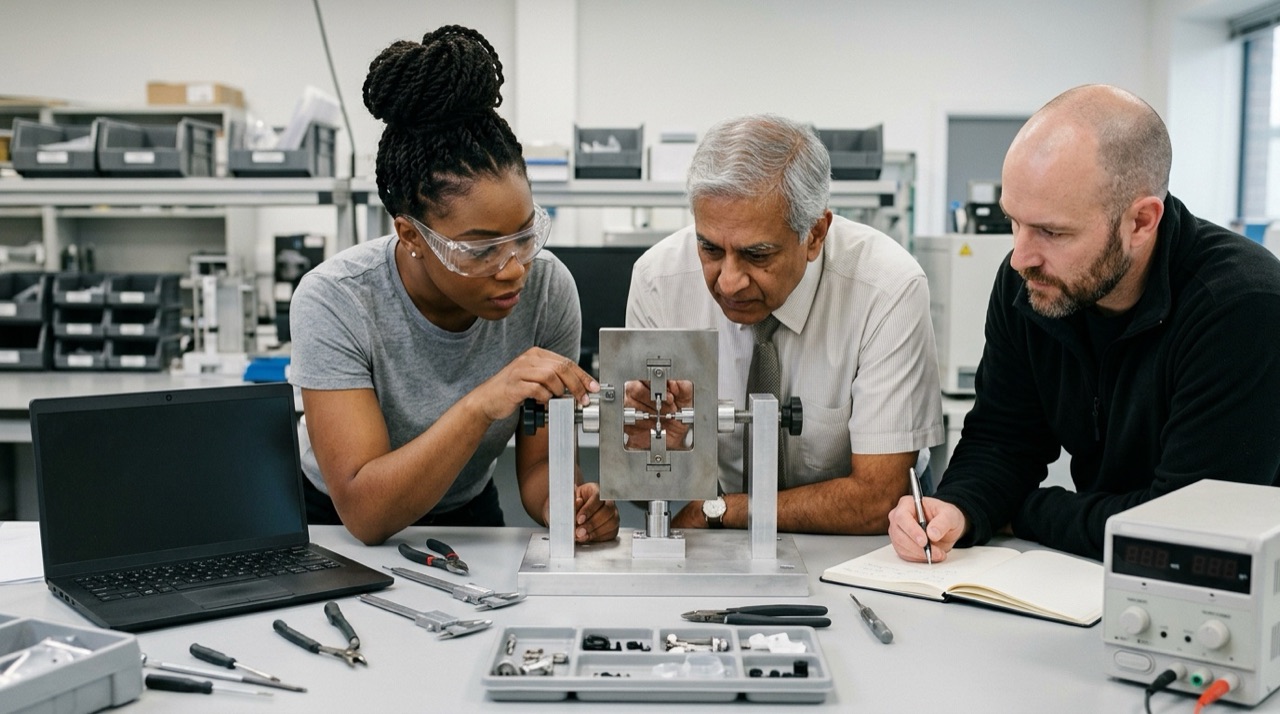

Where the device layer can be taught, recruit from other industries and teach it. Where it cannot, you are recruiting from a short list of people who have done the work in medtech, and they are competitive and in demand.
Hire robotics and controls engineers from outside medtech and teach the device layer
Every surgical robot needs systems, controls and motion engineers, human factors specialists and verification engineers. The people who have shipped a cleared robotic system are a short list in our searches, and many companies are after the same names. Strong robotics and controls engineers also work in automotive and industrial automation.
Hire from there and teach the device layer. Screen for real-time control, motion and safety-critical software, and for verification discipline. Ask for a system they took from prototype to a verified release and what their test plan caught. Design controls, the IEC 62304 software lifecycle and the 510(k) or PMA documentation can be learned on the job, in our experience, if a device-experienced lead sits beside the new hire for the first program.
Move fast. In our experience these engineers hear from several employers at once, and a slow process loses them. Put the device-experienced lead in the final interview, so the person who will teach the device layer judges whether the candidate will take to it.
Screen EP field clinical engineers for time in the lab
A field clinical engineer supporting an ablation or mapping system has to be credible in the room with electrophysiologists, and that credibility comes from years of cases. Treat lab time as the part you cannot teach. Look at field clinical teams at other device companies and at EP lab nurses and technologists.
Ask how many cases they have supported, on which mapping systems and ablation technologies, and what they did the last time a case went wrong. IBHRE's allied professional credentials, CEPS for electrophysiology and CCDS for cardiac devices, are one signal of that depth. A strong answer has case counts, systems and a specific bad day. A weak one stays at the level of product training.
Move quickly here too. In our experience the people with that lab time are concentrated at a handful of established companies and heavily recruited. Build a case observation with your own clinical team into the final round, so the candidate and your team see each other at work.
Screen RA and QA leaders for the submissions and inspections they owned
Regulatory and quality leadership has to be device-native. The job rests on a track record of submissions carried to a decision and inspections hosted, and in our experience that does not transfer in from an adjacent industry.
Ask which submissions they led, 510(k), De Novo or PMA, what class the device was and what FDA asked. Ask which inspections they hosted and what changed after the observations. For EU markets, add the MDR or IVDR work they owned. A strong answer separates what they led from what they supported. A weak one describes the department. Open the search a submission ahead, so the person who will lead your next filing is hired before its planning starts.
Among the searches we have run is a VP of Regulatory & Quality for a growth-stage neurovascular device company. Our VP of regulatory affairs playbook covers the level, and our piece on scoping a first regulatory or quality leader covers the job description.
Hire post-market and complaint handling as its own role
Complaint handling, adverse event reporting and vigilance need people who can run them at scale and defend them in an audit or inspection. Write the job as a role of its own, with its own requisition and reporting line, and keep it out of a quality engineer's side duties. Look at device companies with a large installed base, and at complaint handling leads who have run their process through a field action.
This role needs device experience too. Ask which complaint investigations they closed, how they made reportability decisions, how they trended complaints and what an auditor or inspector found in their system. A strong answer walks through one complaint from intake to a reporting decision. A weak one describes the software the team used.
Among the searches we have run is a Director, Post Market Surveillance & Vigilance for a public interventional device company. Start the search when the installed base or the product line grows, before the complaint volume does.
Compete with tech employers for firmware engineers
As devices become software-defined and connected, companies need engineers fluent in firmware, real-time operating systems and IEC 62304, and increasingly in cybersecurity. Connected-device and tech employers recruit the same engineers, so a device company competes outside its own industry for them.
The device layer can be taught here too. Screen for embedded C or C++, real-time operating systems and low-level debugging on hardware, and teach design controls and the software lifecycle. Ask for a bug they found on the hardware and how they tracked it down. A strong answer has a debugger or a scope in it and ends at a root cause. A weak one stops at the code. Compete on what you can show, such as the product and the patients it serves, a clear technical problem, a fast process and a range you have checked against the market. Our 2026-2027 Compensation & Hiring Report is one place to check it. Put one of your own firmware engineers in the technical interview, and keep the process short enough that an offer lands before a competing one does.
If the device has cybersecurity risk, FDA's February 2026 premarket cybersecurity guidance covers the cybersecurity design, labeling and documentation it recommends for the submission, so plan for someone who owns that work from design onward.
If you have one of these roles open, talk to us about the search.
Frequently asked questions
Which medical device roles are hardest to fill?
In our searches, surgical robotics and controls engineers, EP field clinical engineers, regulatory and quality leaders, post-market surveillance and complaint handling leads, and firmware engineers take longest. Each combines deep technical skill with device experience that takes years to build.
Can we hire device engineers from other industries?
Partly. Robotics, controls and firmware engineers can come from automotive, industrial automation and tech, and learn design controls, IEC 62304 and the submission work on the job with a device-experienced lead beside them. Regulatory, quality and post-market leaders need device experience from the start, in our experience.
What should a regulatory VP have done before?
Led submissions in your device's class to a decision, and hosted an FDA inspection. Ask which 510(k), De Novo or PMA files they led, what FDA asked and what changed afterward, and add MDR or IVDR work for EU markets. Our VP of regulatory affairs playbook covers the rest of the screen.
When does a device team need a cybersecurity engineer?
Before the first premarket submission for a device with cybersecurity risk. FDA's February 2026 guidance sets out the cybersecurity design, labeling and documentation it recommends in premarket submissions for those devices, and someone has to own that work from design onward.