


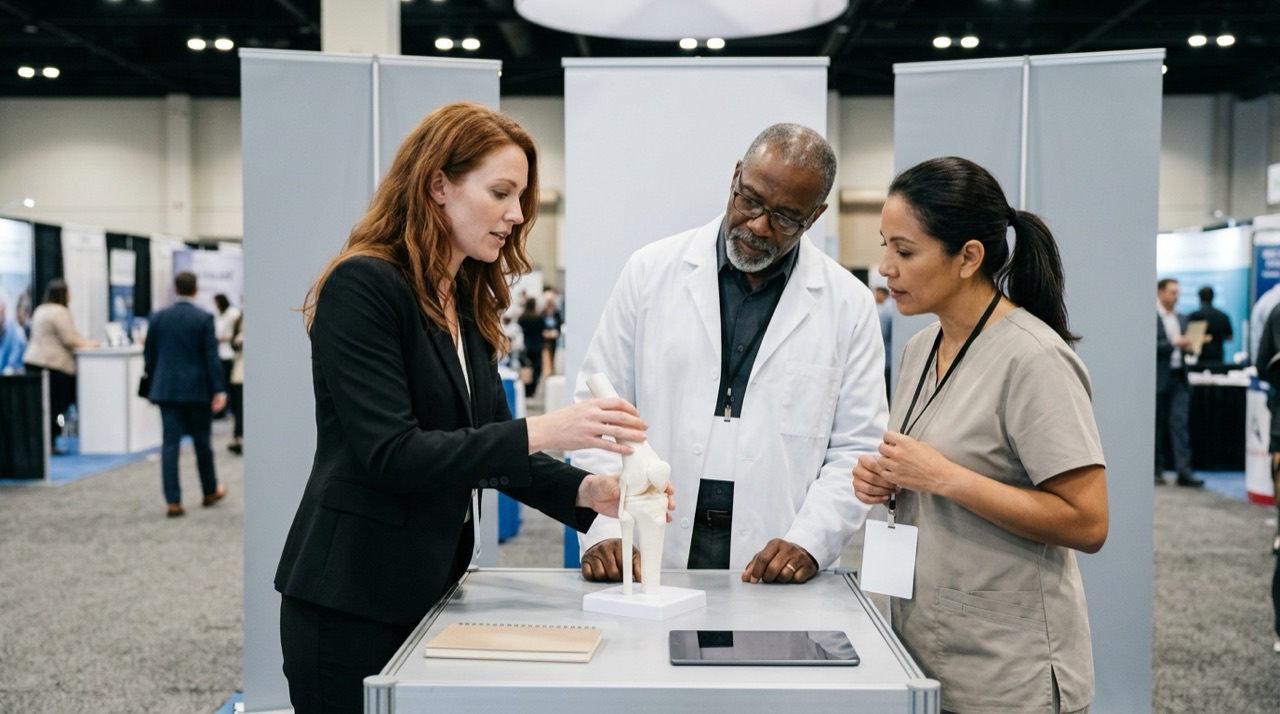

The device sales job that a ten-year veteran trained for is not quite the job open today. Five shifts are changing who succeeds in the role and who a hiring team should be looking for.
1. The buying committee has grown. A capital or implant decision rarely rests with one surgeon anymore. Value-analysis committees, supply chain, and system-level procurement now sit alongside the clinician, and a rep who can only sell to the physician in the room is selling to half the committee. The reps winning today can translate clinical value into the health-economic and budget language the rest of the committee speaks.
2. Clinical and commercial roles are converging. The line between a sales rep and a clinical specialist has thinned, especially in procedure-heavy categories where the rep is expected to support a case, not just close the account. Hiring teams increasingly look for commercial candidates with real clinical fluency, and clinical specialists with enough commercial instinct to see an expansion opportunity in the room.
3. Data and remote monitoring change the call pattern. Connected devices and remote monitoring platforms are shifting some of the relationship from in-person visits to data review, and a rep who can read utilization data and flag an account at risk before a competitor does is doing a different job than a rep who only shows up for the next order. The skill set is shifting toward analytical fluency alongside relationship skill.
4. Reimbursement fluency moved from nice-to-have to required. A new device without a settled coding and coverage path struggles regardless of its clinical merit, and reps are increasingly expected to speak competently about coverage and health-economic evidence rather than leaving that conversation entirely to a reimbursement specialist. The strongest territory candidates now carry at least a working fluency in how their product gets paid for.
5. Career paths are diversifying. The traditional rep-to-manager-to-director ladder is widening into parallel tracks: strategic account management for complex health-system relationships, clinical specialist roles with their own advancement path, and commercial roles inside smaller, faster-growing device companies that offer equity in place of a bigger base. A hiring team competing only on the old ladder is competing for a shrinking pool of candidates who still want to climb it.
What each shift changes in a job description
Each of the five shifts shows up in a requisition if the hiring team writes it that way. The larger buying committee argues for naming the committees the rep will present to, such as a value-analysis committee or a system-level purchasing group, in place of a line about relationships with surgeons. Converging clinical and commercial work calls for stating whether the rep supports cases and how many a month. Data and remote monitoring call for naming the platform the rep will review with customers. Reimbursement calls for saying who owns coding and coverage questions: the rep, a specialist or both. The wider career paths call for stating which track the opening sits on.
One screening question for each shift
A screen that tests each shift needs one question apiece.
- Buying committee: which committees did you present to in your last two wins, and who on each one raised the hardest objection?
- Clinical and commercial: describe a case you supported and what you did in the room.
- Data: what did you look at in a customer's utilization data last quarter, and what did you do about it?
- Reimbursement: walk through how your last new product got paid for at one of your accounts.
- Career track: which of these do you want in three years, account management, a clinical track, commercial leadership or something else?
Strong answers name committees, cases, accounts and dates. Weak answers describe a general approach. The full question set, with what a strong answer holds for each, is in medical device sales interview questions worth asking.
Writing the territory for the buyers
A territory described as a map is easy to fill with the wrong candidate. A territory described as a list of named systems, each with its committee and the date its largest agreement renews, tells a candidate what the job actually is. Hiring B2B sales reps in medical device covers that approach in more detail.
The hybrid clinical and commercial role
A commercial candidate with clinical fluency and a clinical specialist with commercial instinct are two different searches, and the requisition should say which one is open. Recruiting a medical device clinical specialist covers where candidates come from and how to interview case coverage.
Pay for the newer tracks
Strategic account roles, clinical specialist tracks and commercial roles at smaller companies are paid differently from a territory rep role. The Compensation & Hiring Report has base and total compensation for device sales roles at three company stages, and medical device sales salary shows the ranges.
For the hire itself, see how to hire a medical device sales rep and medical device sales interview questions worth asking. For the adjacent clinical role, see how to hire a clinical specialist.
Frequently asked questions
- What is changing in medical device sales hiring?
- Five shifts: the buying committee has grown, clinical and commercial roles are converging, data and remote monitoring change the call pattern, reimbursement fluency is now expected, and career paths are widening beyond the rep-to-manager ladder. Each changes who a hiring team should look for.
- Who is on a device purchase decision now?
- A capital or implant decision rarely rests with one surgeon. Value-analysis committees, supply chain, and system-level procurement sit alongside the clinician, so a rep who can only sell to the physician is selling to half the committee.
- Is clinical experience becoming more important than sales experience in device sales hiring?
- Neither replaces the other. Hiring teams look for commercial candidates with real clinical fluency, and for clinical specialists with enough commercial instinct to see an expansion opportunity in the room.
- How is remote monitoring changing the device sales role?
- Connected devices and remote monitoring move part of the relationship from in-person visits to data review. A rep who can read utilization data and flag an at-risk account early is doing a different job from one who shows up for the next order.
- Why does reimbursement matter for a device sales rep?
- A new device without a settled coding and coverage path struggles regardless of its clinical merit. Reps are increasingly expected to speak competently about coverage and health-economic evidence, not leave that to a reimbursement specialist.
- Are career paths in device sales still built around becoming a manager?
- Less than they were. The rep-to-manager-to-director ladder is widening into strategic account management, clinical specialist tracks, and commercial roles at smaller device companies that offer equity in place of a larger base.